
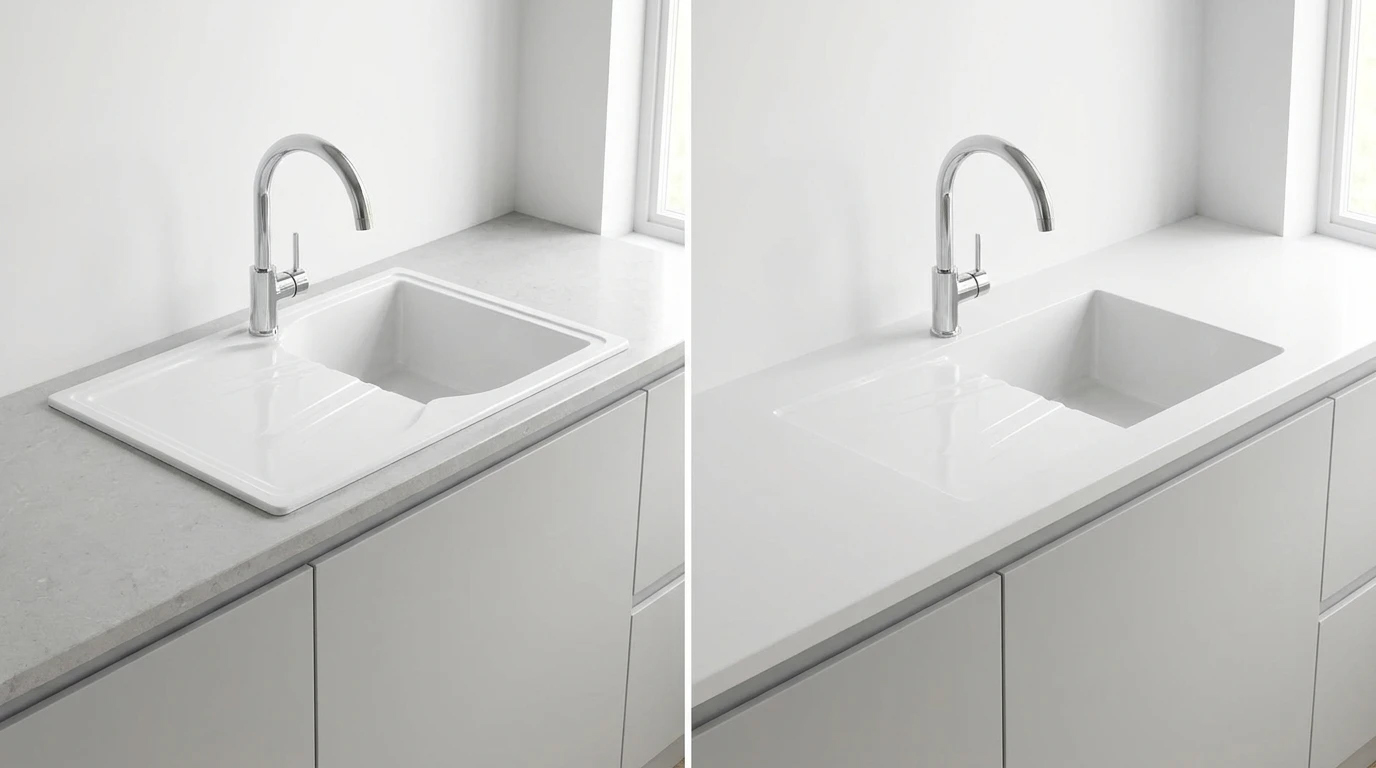
Built-in or surface sink? Selection guide for the kitchen
Built-in sink or countertop; Which one is more suitable for your kitchen? Know the difference between installation, sealing, cleaning and replacement and make a more accurate choice with the pre-purchase checklist.
Which way of installing the sink is more compatible with your kitchen?
When buying a sink, the number of basins and the appearance of the product come to the fore; But the installation method can be equally effective in your choice. A sink that is suitable for a kitchen under construction is not necessarily the best option for replacing an old sink. The condition of the cabinet surface, the size of the unit and the possibility of sealing should be checked before purchase.
If you are in doubt between a built-in or a surface sink, it is better to know the functional and practical differences instead of choosing one of them as superior. In this guide, these two terms mean their common usage in the Iranian market; However, the installation plan of each model should be the reference for the final decision.
What is the difference between a built-in and a surface sink?
How is the built-in sink installed?
In the common built-in model, the cabinet plate is cut according to the product pattern and the sink is placed inside it; The edge of the sink usually sits on top. Therefore, a part of the plate around the sink remains and the contact between the two must be sealed according to the installation instructions.
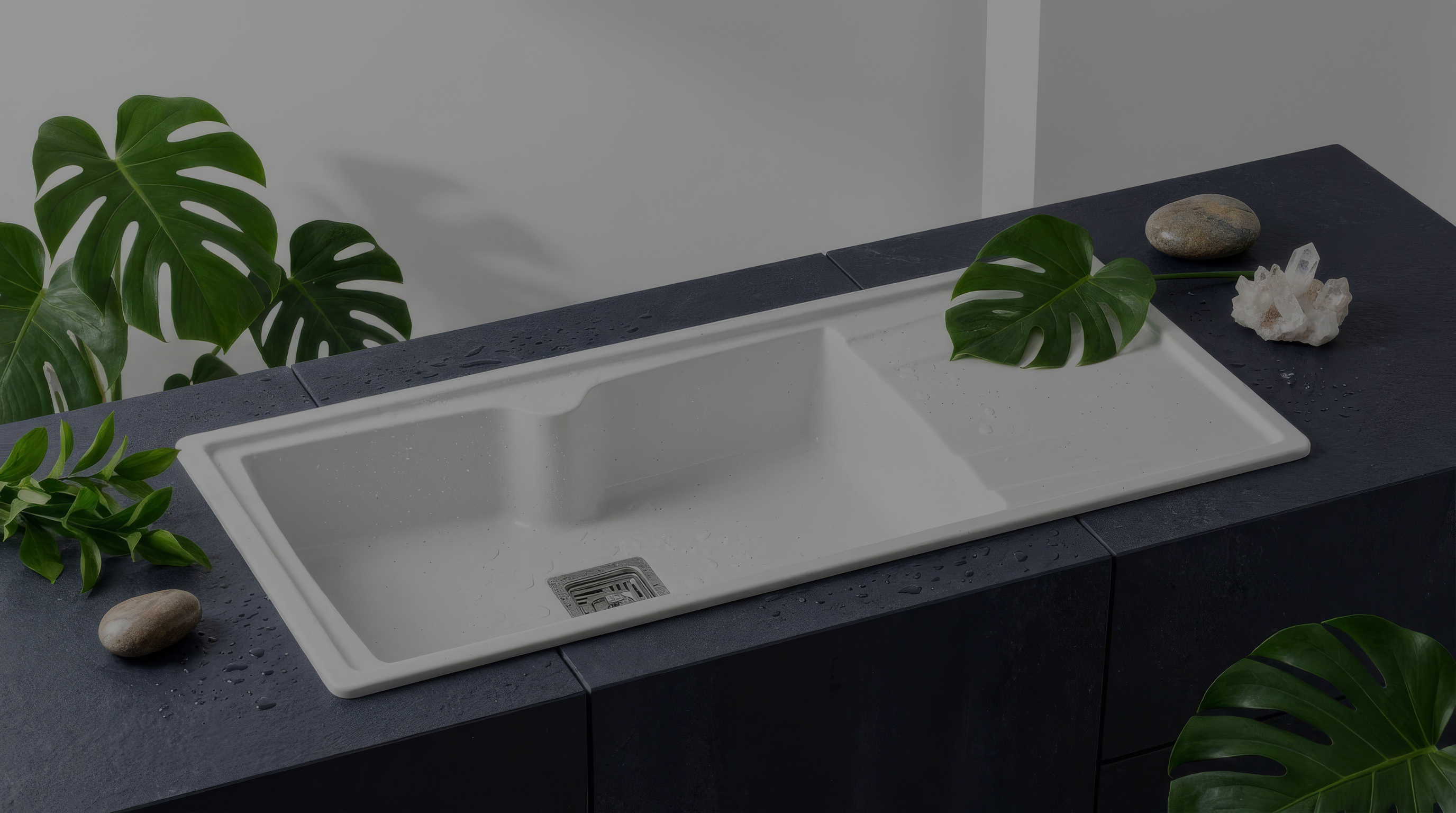
Don't confuse flush mount with flush mount. These methods have different implementation details and not every sink is suitable for all of them. When ordering, specify the type of installation with a picture and technical drawing, not just with the product name.
How is the countertop sink installed?
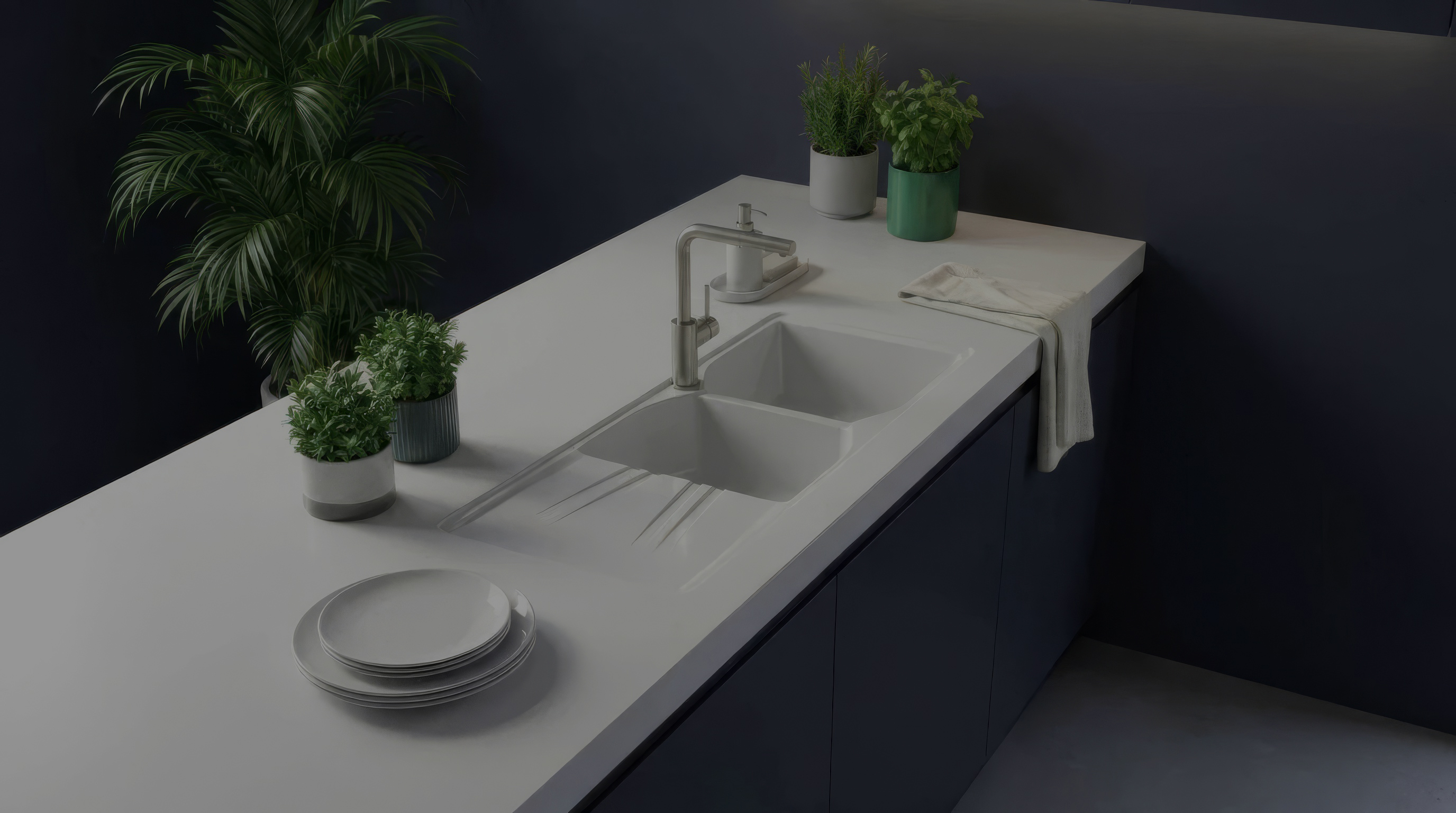
In the common countertop model of the Iranian market, the sink set is placed on the cabinet unit and usually covers the depth of that section from front to back. Many of these models have a curved edge on the back; However, the shape of the edge and the way of connection are not the same in different models.
In this case, the connection to the wall, cabinet and adjacent surfaces must be done correctly.Being exposed does not mean no need for sealing.
1. First, check the status of the cabinet page
If you are designing a new kitchen, it is more possible to coordinate the top, unit and sink. It is better to finalize the sink model before cutting the plate so that the dimensions of the cut, the location of the valve and the space required for fasteners are determined based on the same product.
In the existing kitchen, the restrictions are more. To replace the built-in sink, the dimensions of the current cut, the health of its edges, and the possibility of covering the cut with a new model should be checked. The same outer size does not necessarily mean the same cut pattern. For the facade model, the size of the unit and the way it is connected to the adjacent parts are also important.
Ask the plate manufacturer and installer about the compatibility of the plate with the installation method and the method of protecting the cutting edges. Without knowing the type and condition of the screen, it is not possible to recommend an implementation method for all kitchens.
2. Consider the seal more important than the model name
One of the common questions is which type of sink is less likely to cause the cabinet to get wet. The answer doesn't just depend on whether it's built-in or veneered; The quality of the execution, the condition of the seams, the tap and sewer connections and the way of use are also effective.
- In the built-in sink, the connection of the edge of the sink to the plate and the protection of the cutting edge should be checked.
- In the countertop sink, it is important to connect the back and sides to the wall and adjacent surfaces.
- In both models, valve leakage, hoses, under water and siphon must be controlled separately.
- The sealing materials and their implementation method must be compatible with the surfaces in contact and the manufacturer's instructions.
After installation, check the connections for water flow and drainage. If moisture is found inside the cabinet, instead of covering all the seams with glue, first find the source.
3. Compare cleaning by design details
The ease of cleaning is not only related to the type of installation. The shape of the edge, the number of seams, the design of the tray and the access behind the valve also affect the daily cleaning. In the built-in model with an edge, see the contact point of the edge and the plate; Check the connection to the wall and corners in the facing model.
When comparing, imagine you want to clean around the faucet and the sides of the sink after washing the dishes. Do you have enough access? Does a distance remain narrow and far from reach? These details are sometimes more important than the difference in the appearance of the two models.
The choice of detergent depends on the material and coating of the product. Follow the manufacturer's maintenance instructions for sinks and cabinet tops, and do not assume the suitability of acids, bleaches, or abrasive tools without confirmation.
4. Do not forget the dimensions of the pelvis and the space under the sink
You may choose the correct installation method, but the basin is not suitable for your large dishes or the space below it interferes with the equipment inside the cabinet. Check the external dimensions of the sink separately from the useful length, width and depth of the basin.
- Set your largest pan or tray as the basin comparison.
- Coordinate the direction of the tray and basin with the place of food preparation and the placement of dishes.
- Measure the space required for the siphon, hoses and possible equipment under the sink.
- Check the installation location of the valve and the possibility of its movement relative to the wall or window.
A deeper pelvis is not necessarily better for everyone; Installation height and ease of user access should also be considered.
5. Calculate the cost for the work set
It is not possible to say that the built-in sink is always more expensive or the facade is always more economical without comparing the models. The price of the product is only part of the final cost. Cutting or replacing panels, modifying cabinets, moving connections and installation fees may also be added to the project.
For a more accurate decision, take the cost of the product and the full implementation of each option separately. In limited reconstruction, a model that is compatible with the current structure may require fewer changes; But this issue should be checked on the spot.
Checklist before buying a sink
- Record unit dimensions and existing page status.
- Get the installation plan, external dimensions and cutting pattern of the selected model.
- Coordinate the type of installation and the possibility of its execution with the installer.
- In the direction of the pelvis and tray, check the location of the faucet and the space under the cabinet.
- Ask about included items and parts you need separately.
- Specify the cost of possible changes before ordering.
Frequently Asked Questions
Is the built-in sink the same as the under-surface sink?
No. The common built-in model usually has an edge on the screen. Sub-panel installation is a different method and requires compatibility of the sink, plate and fittings.
Does the countertop sink need sealing?
requires. The connection to the wall and adjacent sections, along with water and sewage connections, must be checked and executed according to the installation instructions.
Can the surface sink be replaced with a built-in one?
It is possible, but there is a possibility of needing a new screen or modifying the cabinet. The possibility of this change should be checked before buying.
Which model is better for a small kitchen?
The type of installation alone is not decisive. The size of the sink, its fit with the unit and the amount of remaining work surface are more important.
Summary: compatibility with the kitchen is the main selection criterion
Choosing between the built-in sink and the surface should be done based on the state of the plate and cabinet, installation quality, daily needs and the full cost of implementation. Amitis produces all kinds of built-in and surface-mounted sinks. To check the options suitable for your kitchen, prepare the dimensions of the installation site and get information about the specifications and installation plan of the desired models.
Share: What do you think?
We respect and appreciate your thoughts and opinions, and look forward to your responses